Ficha Técnica e Análise
O The New Mind Readers: What Neuroimaging Can and Cannot Reveal about Our Thoughts (English Edition) é bom? Vale a pena?
Muitos usuários perguntam se o The New Mind Readers: What Neuroimaging Can and Cannot Reveal about Our Thoughts (English Edition) vale a pena. Baseado em nossa análise de histórico de preços e ficha técnica, este produto é uma opção popular na categoria E-readers. Verifique os pontos positivos e negativos abaixo para tomar sua decisão.
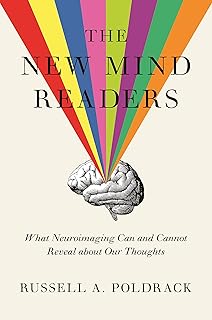
Análise do produto The New Mind Readers: What Neuroimaging Can and Cannot Reveal about Our Thoughts (English Edition)
The New Mind Readers: What Neuroimaging Can and Cannot Reveal about Our Thoughts
by Russell A. Poldrack
Introduction
Imagine a world where your thoughts could be read like a book. A world where a simple scan could reveal your deepest desires, your hidden fears, and even your political leanings. This is the tantalizing, and sometimes terrifying, promise of modern neuroimaging. In "The New Mind Readers," Russell A. Poldrack, a leading neuroscientist, takes us on a fascinating journey through the cutting-edge world of brain scanning, separating the science fiction from the science fact.
What is Neuroimaging?
At its core, neuroimaging is a collection of techniques that allow us to peer inside the living brain. The most common method is functional Magnetic Resonance Imaging (fMRI), which measures changes in blood flow to infer which brain regions are active during different tasks. It's like taking a series of snapshots of the brain in action, revealing the intricate dance of neurons as we think, feel, and act.
The Promise of Mind Reading
Poldrack masterfully explains how neuroimaging has already achieved a form of "mind reading." Scientists can now:
- Predict choices: By analyzing brain activity patterns, researchers can predict which button a person will press seconds before they consciously decide.
- Decode visual experiences: Brain scans can reconstruct rough images of what a person is seeing, essentially "reading" their visual thoughts.
- Detect emotions: Different emotional states leave distinct signatures in the brain, allowing for the identification of fear, joy, or sadness.
- Diagnose disorders: Neuroimaging is helping to identify the brain markers of conditions like depression, schizophrenia, and Alzheimer's disease.
The Limits of the Technology
However, Poldrack is refreshingly honest about the current limitations. He emphasizes that:
- It's not telepathy: We can't read arbitrary thoughts or memories with current technology.
- It's not infallible: Brain scans are probabilistic, not deterministic. They provide insights, not certainties.
- It's not mind control: While we can influence brain activity, we cannot control thoughts or actions remotely.
Ethical Considerations
One of the book's greatest strengths is its deep dive into the ethical implications of neuroimaging. Poldrack raises critical questions that we must grapple with as this technology advances:
- Privacy: Who owns our brain data? How do we protect it from misuse?
- Legal implications: Could brain scans be used as evidence in court? Should they be?
- Social impact: How might this technology affect employment, insurance, or social relationships?
Writing Style and Accessibility
Poldrack's writing is clear, engaging, and remarkably accessible. He avoids jargon whenever possible and uses vivid analogies to explain complex concepts. Even readers with no background in neuroscience will find themselves captivated by the stories and insights he presents.
Conclusion
"The New Mind Readers" is not just a book about brain scanning; it's a book about what it means to be human in an age of unprecedented technological advancement. Poldrack offers a balanced, thoughtful, and ultimately hopeful perspective on the future of neuroimaging. He reminds us that while the technology is powerful, it is our humanity—our ethics, our values, our choices—that will ultimately determine how it is used.
This book is essential reading for anyone curious about the brain, the future of technology, or the intersection of science and society. It's a fascinating, thought-provoking, and ultimately optimistic look at one of the most exciting frontiers in modern science.
Highly recommended for:
- Anyone interested in neuroscience and brain imaging
- Readers concerned about the ethical implications of emerging technologies
- Students and professionals in psychology, cognitive science, or related fields
- General readers who enjoy accessible science writing
Comentários (0)
Faça login para comentar
Você precisa estar logado para deixar um comentário sobre este produto.